Skip to content

Celebrations & customs

From asking for her hand to the first mevlid: the words, customs and pieces of family celebrations, briefly explained.

Every family and every region celebrates a little differently. What is written here is what belongs to it in many places.

Bridal bouquet

gelin çiçeği

The bride carries her bouquet through the whole day: to the ceremony, the photographs, the feast. A ribbon around the stems holds it together; with the names and the date on it, it stays a keepsake long after the flowers have dried.

At DUVAMBridal bouquet ribbonAll for the wedding

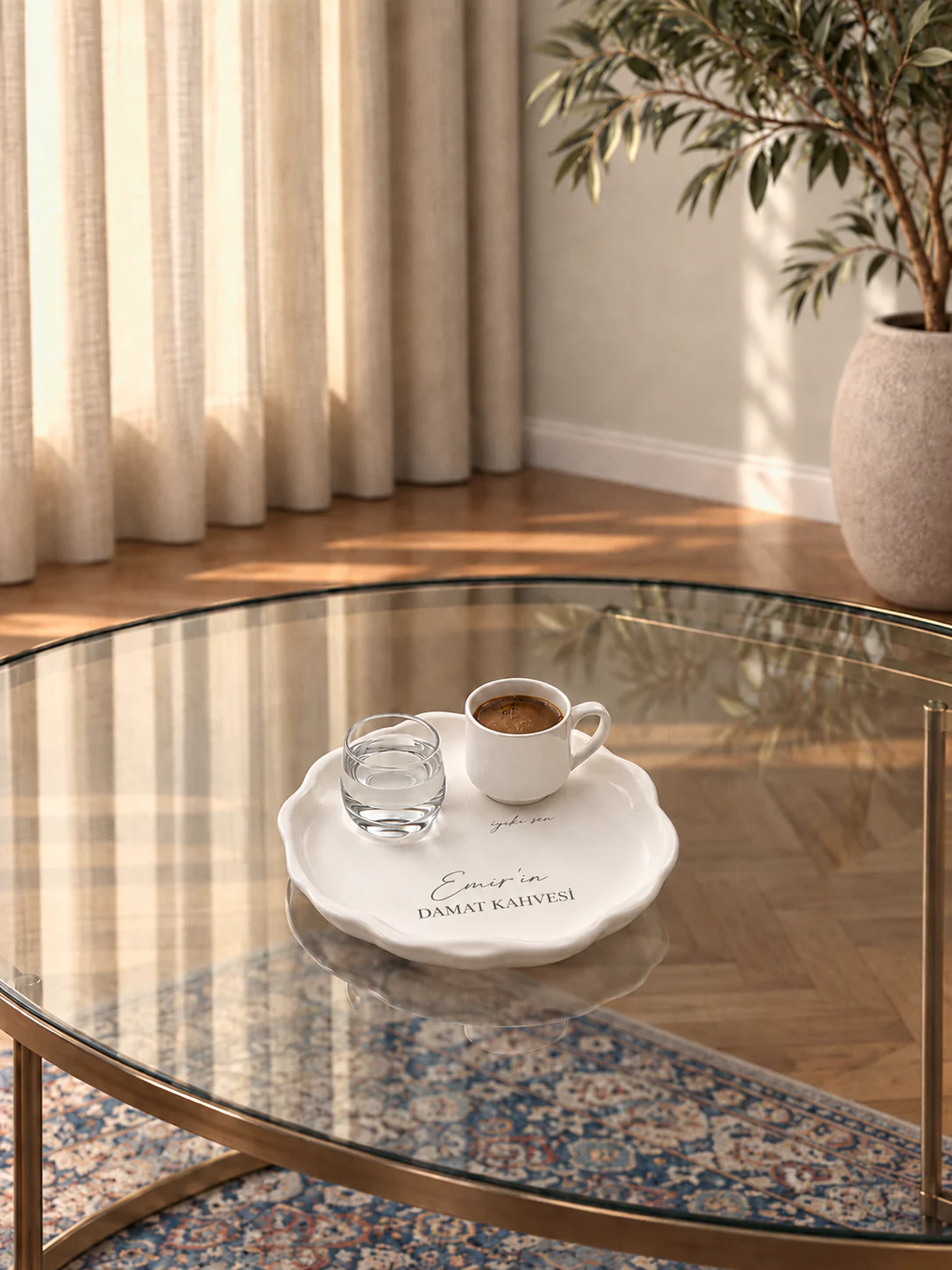
A Turkish coffee and a glass of water on a white plate with a wavy rim reading “Emir'in damat kahvesi” in script, on a glass table.
AI-generated image

Damat kahvesi

the groom's coffee

At the kız isteme, the bride-to-be makes Turkish coffee for the guests. The groom's cup often gets salt instead of sugar. If he drinks it without pulling a face, it is a fond proof of his patience.

At DUVAMAll for the engagement

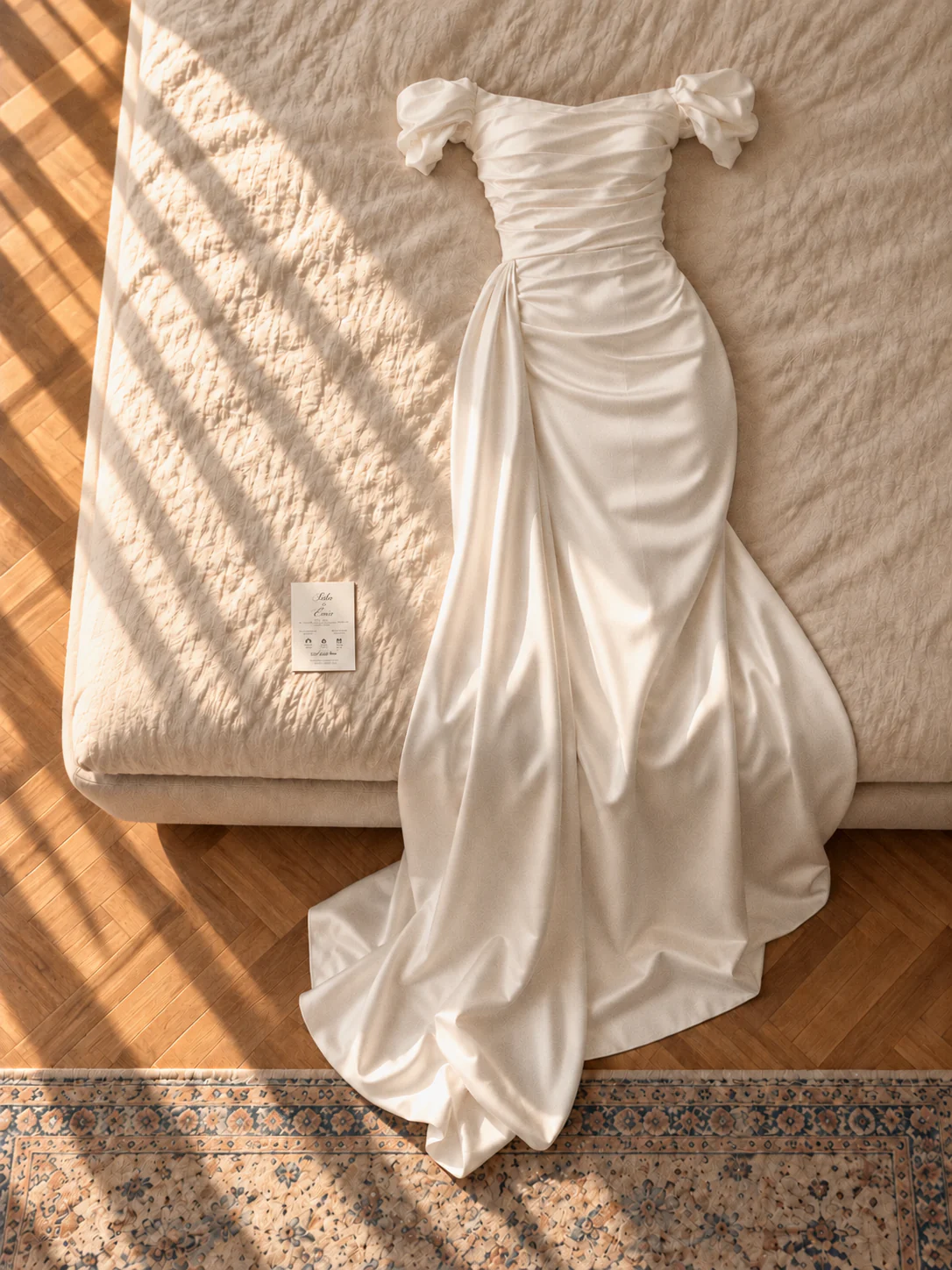
A white satin wedding dress lies spread out on pale upholstery in the sunlight.
AI-generated image

Düğün

wedding feast

The great feast after the ceremony, often with hundreds of guests: music, halay and the couple at the centre. In many places it includes the takı and a guest book in which the guests write their wishes.

At DUVAMGuest bookPlace cardsLarge wedding bowAll for the wedding

Gelin arabası

the bridal car

The car that collects the bride is decorated with bows and ribbons, and the family's convoy follows, horns blaring. Bows on door handles and mirrors show from afar whose celebration it is today.

At DUVAMCar BowLarge wedding bow

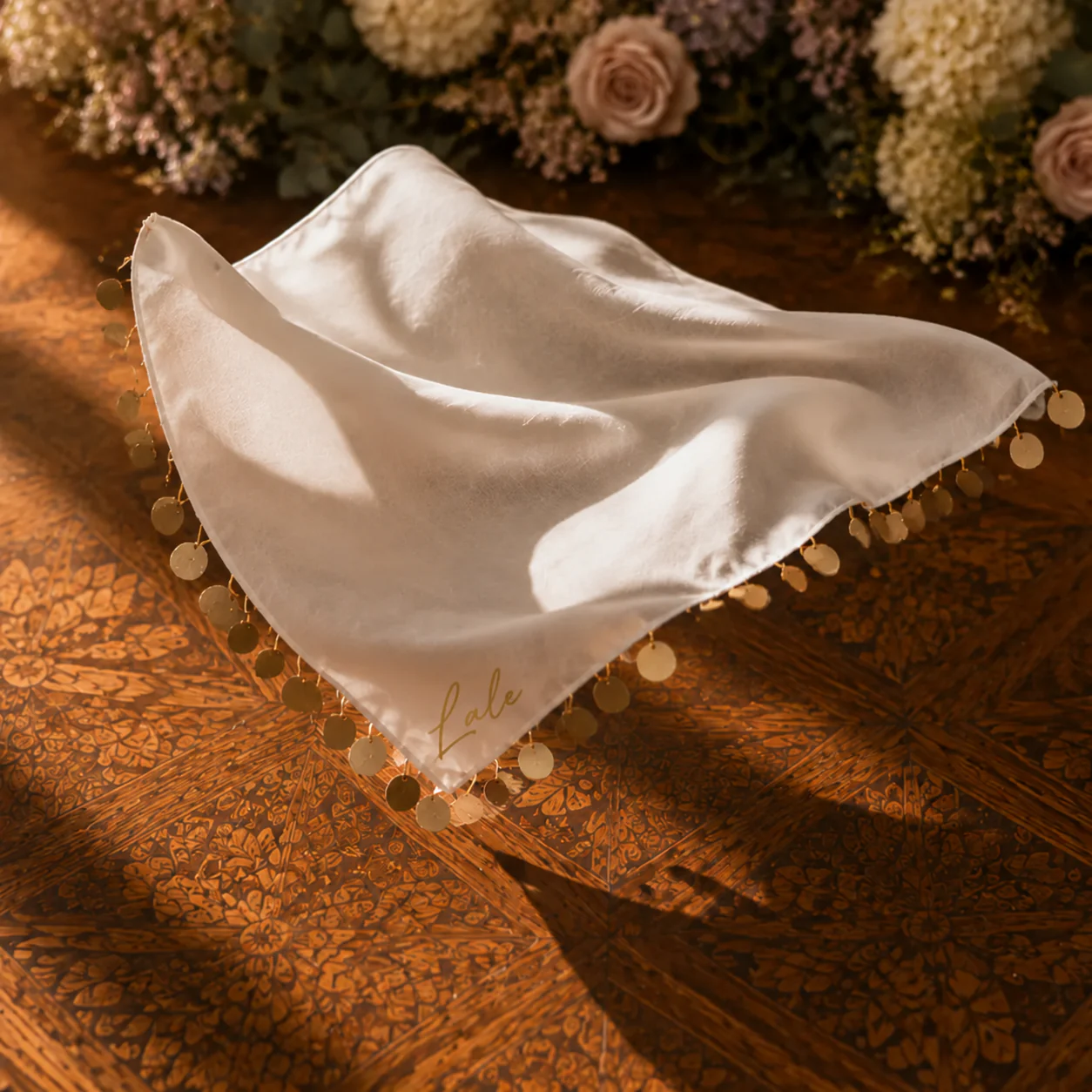
A white halay handkerchief with golden coins lies on a wooden table; the name Lale is written in gold in one corner.
AI-generated image

Halay

round dance

The dance everyone joins: hand in hand or shoulder to shoulder in a long line. At the front dances the halaybaşı, waving a handkerchief: the halay handkerchief (halay mendili), which at many celebrations carries the couple's name.

At DUVAMHalay mendili

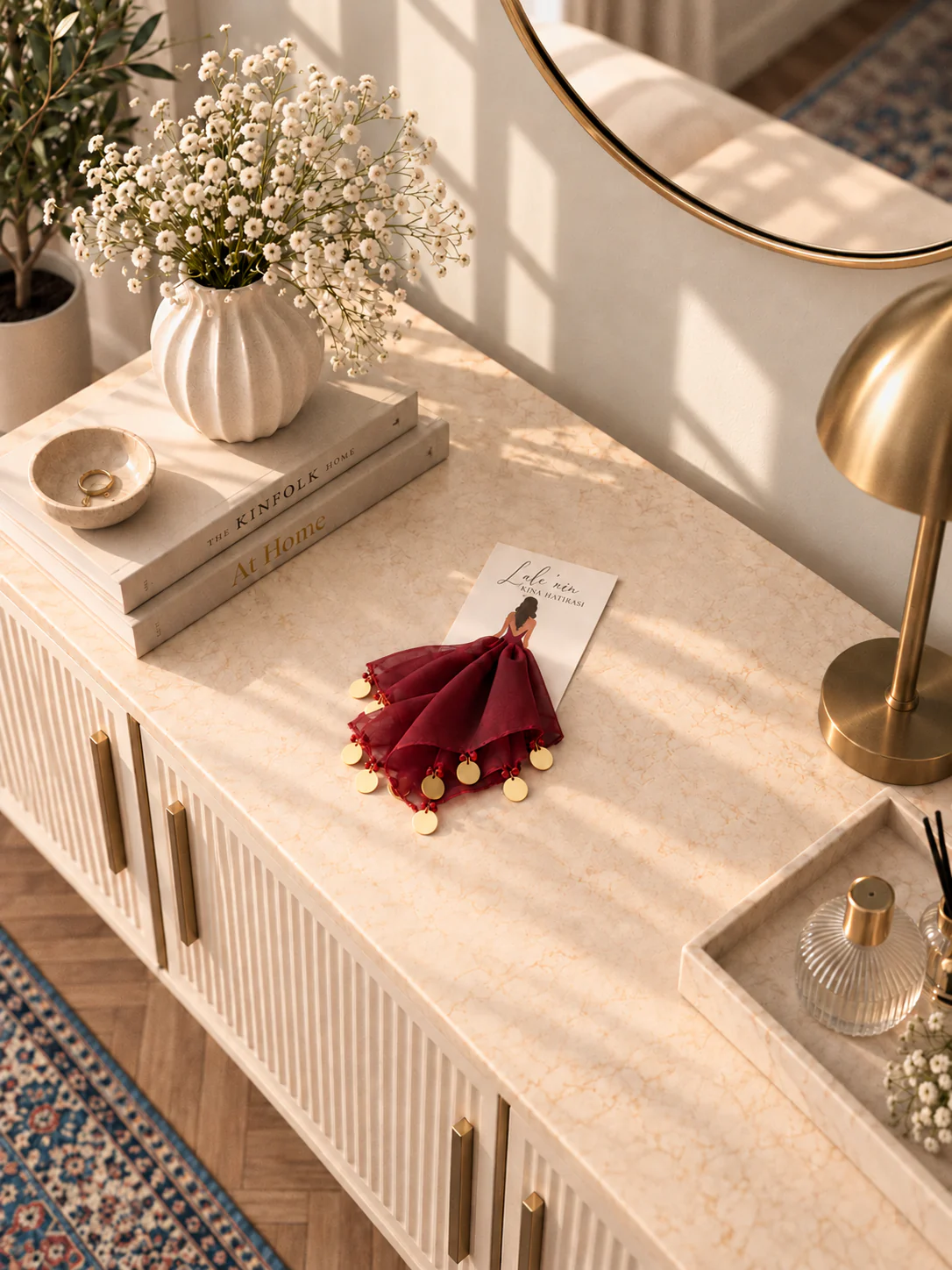
A card reading “Lale'nin kına hatırası” lies on a marble console; a wine-red handkerchief with golden coins forms the dress of the drawn bride.
AI-generated image

Kına gecesi

henna night

Usually the evening before the wedding, traditionally the evening of the bride and the women of both families. The bride wears red and a red veil, the henna is carried in by candlelight, and the old songs bring tears. Henna is placed in her palm, often only after the groom's family has laid a gold coin in it.

At DUVAMHalay mendiliPlace cardsNapkins with namesAll for the henna night

Kız isteme

asking for her hand

The first official step: the groom's family visits the bride's family and asks for her hand, traditionally bringing flowers and chocolates. The elders speak, the couple listens, and the bride serves the damat kahvesi.

At DUVAMAll for the engagement

Maid of honour

nikah şahidi

The friend who stands at the bride's side at the ceremony, and usually long before it. She is often asked with a box: her name on the lid, the question beneath it.

At DUVAMMaid of honour box

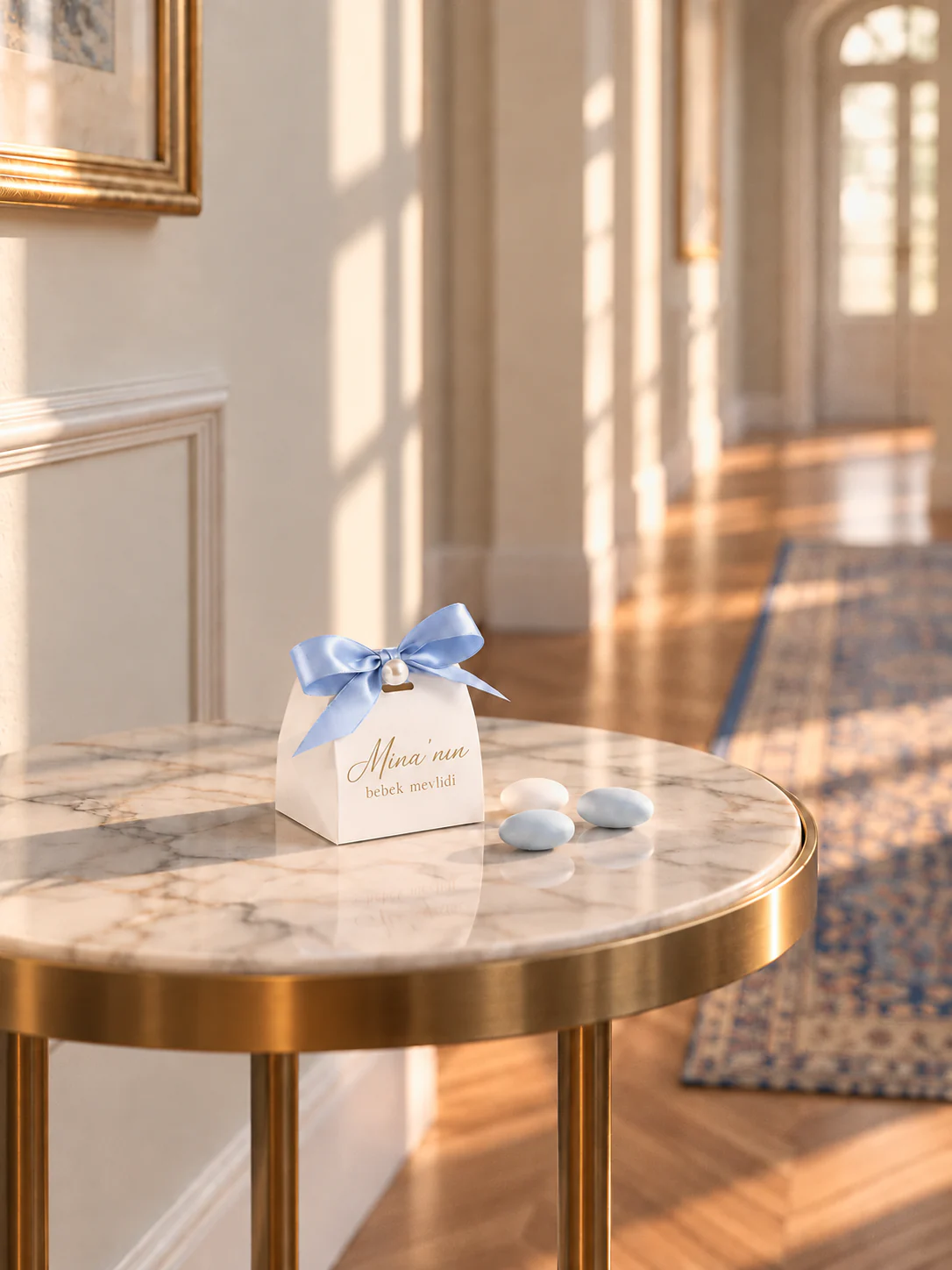
A white favour box with a pale blue satin bow on a marble table reading “Mina'nın bebek mevlidi” in gold, with pale blue sugared almonds beside it.
AI-generated image

Mevlid

Mevlid-i Şerif

The mevlid is a poem on the birth of the Prophet Muhammad, written by Süleyman Çelebi in the early fifteenth century. Families have it recited on special occasions (after a birth, in memory of the departed or out of gratitude) and invite guests to it.

At DUVAMZikirmatik guest giftsAll for the mevlid

Misafir defteri

guest book

The book in which guests write their congratulations at an engagement, a henna night or a wedding. With the couple's names and the date on the cover, it becomes one of the things taken out of the cupboard again years later.

At DUVAMGuest book

Nikah

the marriage ceremony

The marriage itself: in Germany at the registry office, and in many families also as a religious ceremony. Witnesses stand at the couple's side. As they leave, friends often hold ribbons across the way, which the couple cuts one after another.

At DUVAMRegistry office ribbonsMaid of honour boxAll for the wedding

Nişan

engagement party

The engagement party: the couple's rings are tied together with a ribbon, traditionally red, and a respected member of the family cuts it. From then on the two are engaged. There is music, there are guests, and often the first takı.

At DUVAMRing ribbonRing dishPlace cardsAll for the engagement

Söz

the promise

After the kız isteme, the families give each other their word: söz kesmek. Often in a small circle, sometimes already with rings joined by a ribbon. The söz is the beginning; the party that follows is the nişan.

At DUVAMRing ribbonAll for the engagement

Takı

jewellery and gold

At the nişan and the düğün, relatives and guests pin gold coins, jewellery or banknotes to a ribbon worn across the couple's dress and suit. In many places, who gives what is announced out loud.

At DUVAMRing & takı ribbons

Zikirmatik

prayer counter

A small counter for keeping count during zikir (the repeated remembrance of God) instead of moving the beads of a prayer string. At a mevlid or bebek mevlidi it is a favourite favour for guests, on a card with a name and a date.

At DUVAMZikirmatik guest gifts

Is a word missing? A message to info@duvam.de is enough and we will add it to the lexicon.